June 26, 2026
Why Third Places Matter
Written by: Tino Noir
You have a home. You have a job. The place in between — the bar, the coffee shop, the gym — might be the most important one.
Most people's lives run on two tracks: home and work. The commute between them. The errands around them. A weekend that's basically a reset before the whole thing starts again.
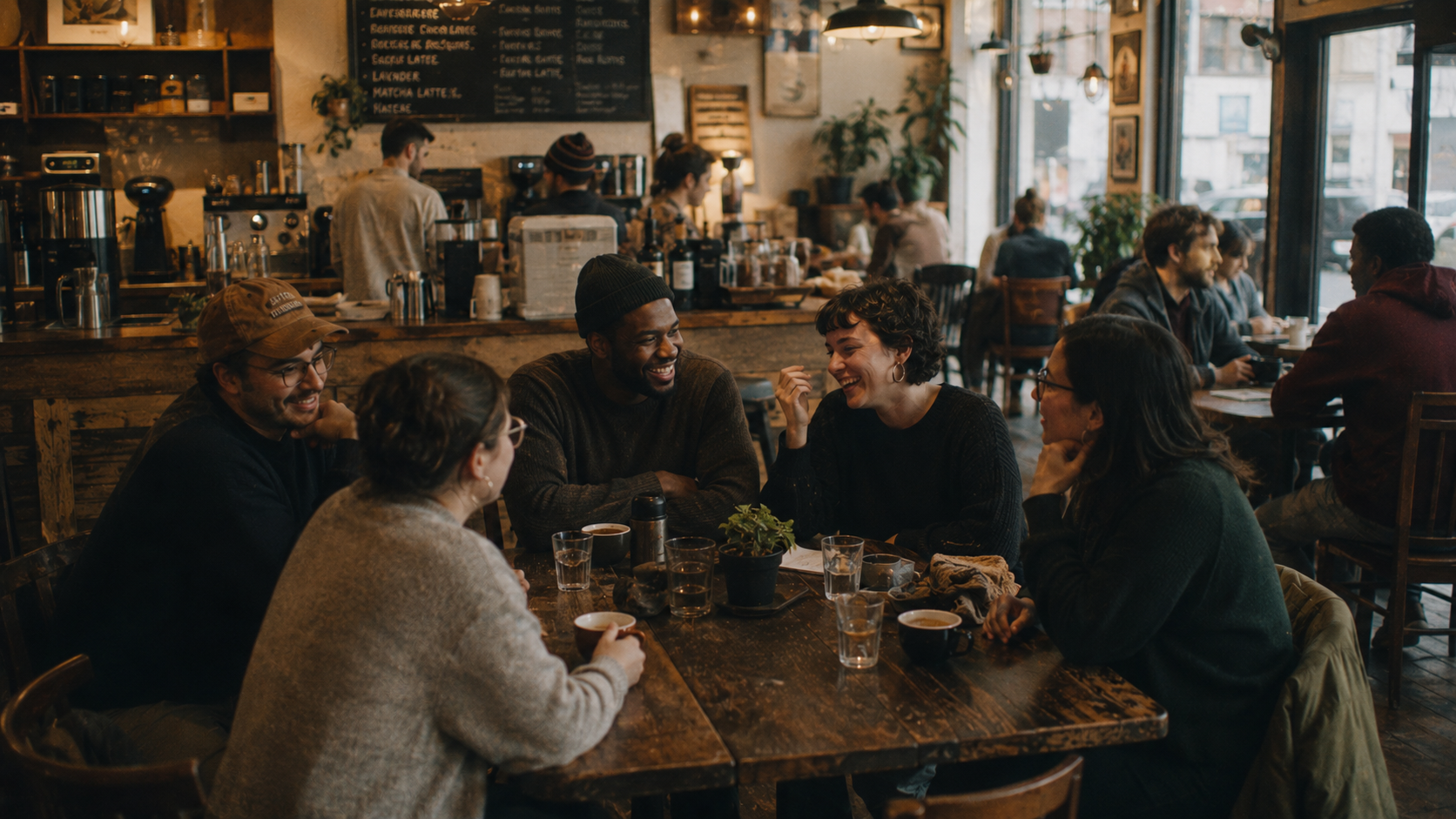
What's missing is the third place. The bar where you're a regular. The coffee shop where they know your order. The gym, the studio, the barbershop, the diner — any place that's neither home nor work but feels like yours. A place where you belong to something outside of your job title and your family role.
Most people don't have one. And it costs them more than they realize.
What a Third Place Actually Does
A third place is where you go to exist as a person, not a function. At work, you're your role. At home, you're your responsibilities. A third place has none of that structure. You show up, you're known, you're welcome — not because of what you produce or who depends on you, but simply because you're a regular.
That's not a small thing. Having a place where you're recognized on sight, where your drink is already moving when you walk in, where someone asks how your week went and actually waits for the answer — that's a form of belonging that most modern life has quietly stripped away.
Why They're Getting Harder to Find
Third places used to emerge naturally from neighborhood life. The corner bar, the barbershop, the diner at the end of the block — places people returned to because they were close, affordable, and woven into the rhythm of daily life.
That fabric has frayed. People move more. Neighborhoods turn over. The places that survive optimize for volume — high tables, loud music, menus designed for Instagram — rather than for the kind of slow, repeated visits that build regulars. And even when the right kind of place exists, most people don't know how to become known there.
The third place isn't gone. But finding one — and actually becoming a part of it — takes more intention than it used to.
What Makes a Place a Third Place
It's not the decor or the menu. It's the relationship. A third place becomes yours when the people there know you — when you stop being a customer and start being a regular. That shift is what changes the experience of walking in. It goes from transactional to relational.
Any place can become a third place if you show up consistently enough, pay enough attention to the people there, and give them something to remember you by. The type of venue matters less than the quality of the connection.
You Have to Build It
This is the part nobody tells you. A third place isn't found — it's built. You build it by going back. By learning names. By having a usual. By asking one real question per visit and remembering the answer. By showing up when it would be easier not to.
It takes longer than it should. The first few visits feel like nothing. Then something shifts — a nod before you've said anything, a drink that appears without being ordered, a conversation that picks up where it left off. That's the moment a place becomes yours.
Most people walk past that moment without ever reaching it. Not because it's hard — because they don't know what they're building toward.
It's Worth It
The people with the richest social lives aren't the ones with the most friends or the busiest calendars. They're the ones with a place. Somewhere they're known, somewhere they're welcome, somewhere the door opens and the room gets a little better because they walked in.
That's available to anyone. It just has to be built.
TAOBAR is built around this idea. Save the places that matter. Track the people there. Walk in ready — with a name, a face, something to say. The third place you've been looking for is probably somewhere you've already been. TAOBAR helps you actually become part of it.
TAOBAR
Walk in ready.
TAOBAR is live on iOS. Download the beta and walk in ready.