July 9, 2026
What Makes a Regular Feel Like a Regular
Written by: Tino Noir
Ask a good bartender what they remember about their regulars and they'll almost never start with the drink.
Ask a good bartender what they remember about their regulars and they'll almost never start with the drink.
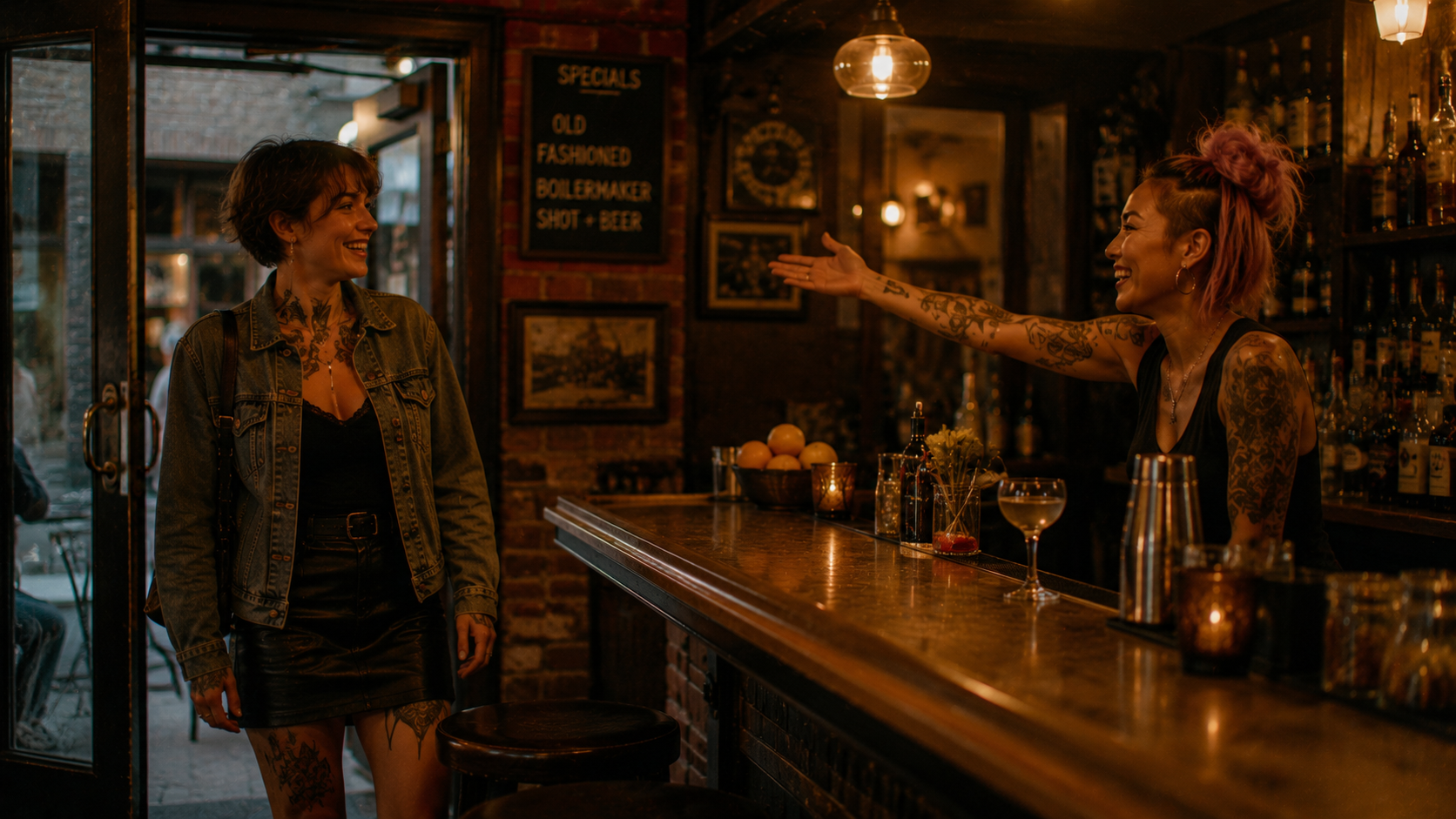
They'll tell you about the guy who always takes the third stool from the left — not out of habit exactly, just because it faces the door and he likes to see who walks in. They'll tell you about the woman who tips 25% every week without fail, except the weeks when something clearly went wrong at work, when she tips 40% and doesn't say much. They'll tell you about the couple who comes in every Sunday evening and orders the same thing and talks quietly for two hours and leaves like they've resolved something.
The order is just the entry point. What they're actually holding onto is who you are.
It's not the order
This is what most people misunderstand about regularity from the other side of the counter. They think the goal is to be predictable — same order, same seat, easy to serve. And predictability helps. But it's not what creates the relationship.
What creates the relationship is specificity. The particular things that mark you as a person rather than a transaction. The fact that you always know exactly what you want and never change your mind. That you never come in on game nights. That you mentioned your kid's recital once and never brought it up again. That you're different on Tuesdays than you are on Saturdays and they've learned to read the difference before you've sat down.
These are the things a good bartender or server carries without being asked to. Without being paid extra for it. Because it's what the job actually is, at its best.
What they actually notice
Good hospitality workers develop a skill that's hard to name: contextual attentiveness. Reading the room, but specifically your room. The way your energy lands differently on a Tuesday versus a Friday. Whether you want conversation or just want to exist in the space without being bothered. Whether tonight is a two-drink night or a four-drink night — and whether the fourth drink needs to come with a quiet question or needs to be left alone.
They notice which seat you move toward before you're halfway through the door. They notice when you come in with someone new and whether you're relaxed or performing. They notice when you laugh more than usual and they file that away even if they don't know the reason.
It's not surveillance. It's hospitality at a level that most people never experience — and when they do, they don't always have language for why the place felt so good.
The ones who get it right
The bartenders and servers and stylists who are best at this have a gift for making you feel like the specific details of your life are worth keeping track of. Not because they're performing warmth. Because they're genuinely curious about the people who come through their door.
They ask one real question per visit. Not 'busy week?' — a question that references something from last time. 'Did that thing ever get sorted out?' 'How'd the interview go?' It takes almost no effort and it communicates something enormous: I was listening. I kept the thread.
Most of us have never been on the receiving end of this often enough to realize how rare it actually is.
Why being remembered feels the way it does
There's a reason walking into a place where someone knows your drink before you've asked for it feels different from every other place in the world. It's not just pleasant — it's a specific kind of confirmation.
Being remembered means you mattered enough to hold onto. That the interaction was real enough to leave a mark. That you were, for a moment, specific rather than interchangeable.
That feeling is what regularity is built on — from both sides. Staff who give it freely are doing something quietly important. And the regulars who make it easy — who show up consistently, tip honestly, and give them something real to hold onto — they're doing something too.
It goes both ways. It always has.
TAOBAR is the other side of this equation — the tool for the regular, not the staff. The staff already know how to hold onto you. TAOBAR helps you hold onto them back: their names, their faces, the thing they told you last time. So when you walk in, you're already ready to make it matter.
TAOBAR
Walk in ready.
TAOBAR is live on iOS. Download the beta and walk in ready.