June 23, 2026
How to Become a Regular at a Wine Bar
Written by: Tino Noir
Wine bars run on trust. Here's how to build it — with the staff, and with yourself.
A wine bar is different from a bar. The pace is slower, the margins are tighter, and the people who work there are usually there because they care about the product. That changes what it means to be a regular.
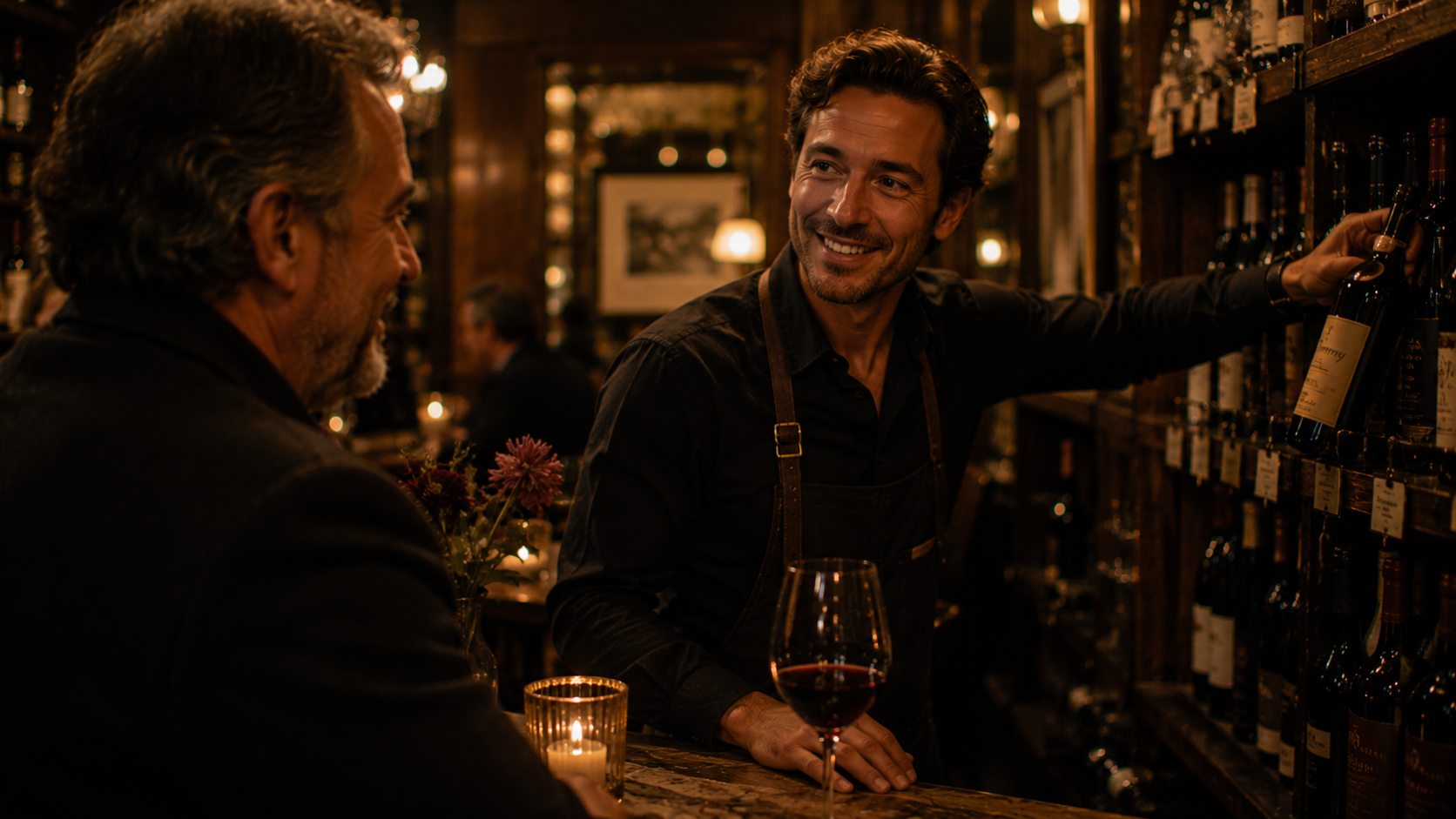
At a wine bar, the relationship is built on trust. You trust their palate. They trust your openness. When that exchange actually happens — when you let someone guide you and then tell them what you thought — the relationship deepens in a way that just showing up repeatedly never will.
Let Them Guide You First
Don't arrive with a list of producers you looked up. Don't lead with what you already know. Say what you're in the mood for — something light, something earthy, something you've never had before — and let them take it from there.
This does two things. It gives them a reason to engage with you as a person, not just process an order. And it shows that you trust their expertise, which is the fastest way to be taken seriously in a room full of people who care about wine.
Learn the Name Early
Wine bars tend to have small, consistent staff. The person who recommends your first glass is often the person you'll see every time. Get their name the first visit — read it if there's a tag, ask if there isn't. Use it once before you leave.
Write it down when you step outside. Wine has a way of making you feel like you'll remember everything. You won't.
Trust the Recommendation — Then Report Back
The most powerful thing you can do at a wine bar is close the loop. If someone recommends a bottle and you love it, tell them next time. If it wasn't quite right, tell them that too — honestly, not critically. "Too tannic for me" is useful information. It starts a conversation.
Staff at wine bars are used to customers who accept a recommendation and then disappear into their table. The person who comes back, references what they had, and says what they thought is genuinely memorable. Most people never do this.
Come Back While They Still Remember You
Wine bars don't have the volume of a regular bar. Staff actually remember faces. But they don't remember forever — if you wait six weeks between visits, you're starting over.
The window for maintaining momentum is about two weeks. Come back in that window and the previous conversation is still available. Come back in a month and you're probably introducing yourself again. A regular is someone who keeps the thread alive.
Develop a Preference, Not Just a Price Point
It's tempting to anchor on budget — "something around thirty dollars" — but that doesn't give anyone much to work with. What you actually like is more useful. Mineral. Stone fruit. High acid. Natural. Old World. You don't need to know the vocabulary perfectly. Describing what you've enjoyed and what hasn't worked is enough.
Over time, a good sommelier will start to know what you want before you say it. That's the moment you become a regular. Not when you know the wine list — when they know you.
Make It a Slow Night Habit
Friday and Saturday nights at a wine bar are full of first-timers and groups celebrating things. The staff is stretched and working. A Tuesday or Wednesday evening is a different room — quieter, more focused, and actually good for conversation.
The regulars at most wine bars come on weeknights. That's not a coincidence. The relationship you're trying to build requires time and attention from both sides. Slow nights have both.
TAOBAR helps you track it. Add the wine bar, note the sommelier's name, log what you ordered and what they recommended. Next time you sit down, you have context — and so does the conversation.
TAOBAR
Walk in ready.
TAOBAR is live on iOS. Download the beta and walk in ready.