June 16, 2026
How Long Does It Take to Become a Regular?
Written by: Tino Noir
The honest answer depends on how you show up — not how often. Here's the actual timeline.
People ask this like there's a number. Like if you show up enough times, something automatically clicks. That's not how it works.
The timeline isn't measured in visits. It's measured in moments of recognition — and those can happen on visit three or never, depending entirely on what you do when you're there.
Visit 1–2: You Are Nobody
This isn't an insult. It's just accurate. First-timers don't register. The staff is focused on the transaction, the pace, the next person in line. Your job in this window isn't to be remembered — it's to pay attention. Learn the layout. Notice who runs the room. Figure out where the regulars actually sit. You are gathering intelligence, not building a relationship.
Visit 3–5: You Are a Face
Something shifts around visit three. If you've come back within a week or two each time, you've crossed the threshold from stranger to familiar face. Not known — just familiar. They've seen you before. They can't place why. This is the critical window. It's fragile. Come back too late and you reset. Come back right and the face becomes a person.
Visit 5–8: You Are a Person
By visit five or six, if you've done the right things — used a name, mentioned something from last time, had one real conversation — you're a person now. They might remember what you drink. They might ask about something you mentioned. The interaction stops feeling purely transactional. This is the most important phase because it's the one most people accidentally skip by going too long between visits.
Visit 8–12: You Are a Regular
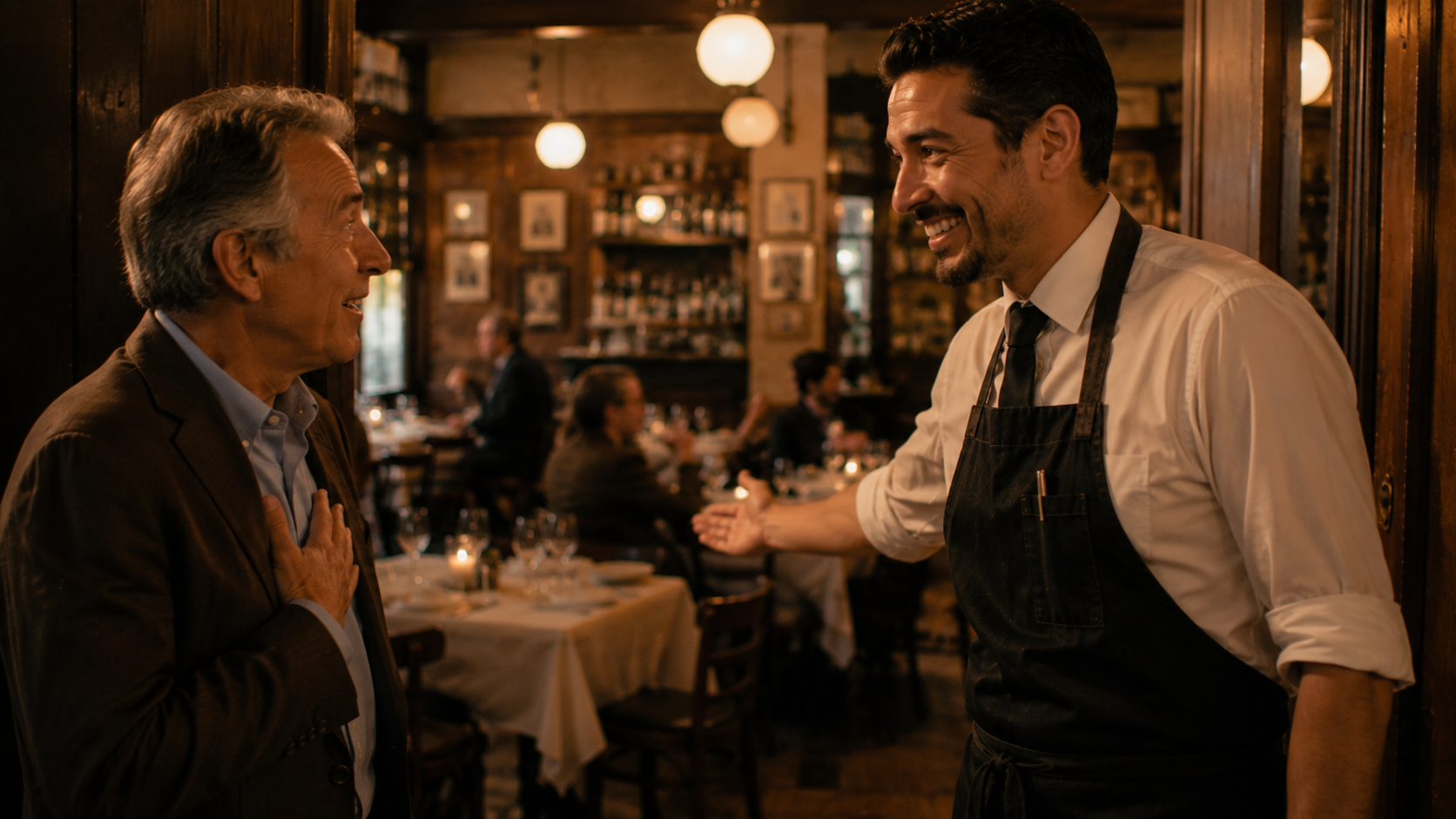
You don't declare this. It's declared for you. It happens the first time someone says "the usual?" without you asking. Or when you walk in and someone's already moving toward the bar before you've sat down. Or when the host seats you in your preferred spot without being asked. You didn't become a regular. You got recognized as one.
The Thing That Accelerates All of It
Memory. Not yours — theirs. But you can influence theirs by how well you manage yours. If you walk back in and reference something real from the last visit, you compress the timeline dramatically. One recalled detail does the work of three passive visits. The bottleneck is almost never frequency. It's whether anything meaningful actually stuck.
That's what TAOBAR is built around. You log what happened after each visit — the name, the drink, the one thing you talked about. Next time you walk in, it's all there. You reference it naturally. The conversation picks up where it left off. What would have taken three months of passive visits takes three weeks of active ones.
TAOBAR
Walk in ready.
TAOBAR is live on iOS. Download the beta and walk in ready.