August 15, 2026
The Difference Between a Good Server and an Unforgettable One
Written by: Tino Noir
It's not speed. It's not charm. It's one variable that most service training never addresses.
Every restaurant has good servers. Attentive, fast, friendly, professional. They do the job exactly as described. Guests leave satisfied. Nothing to complain about.
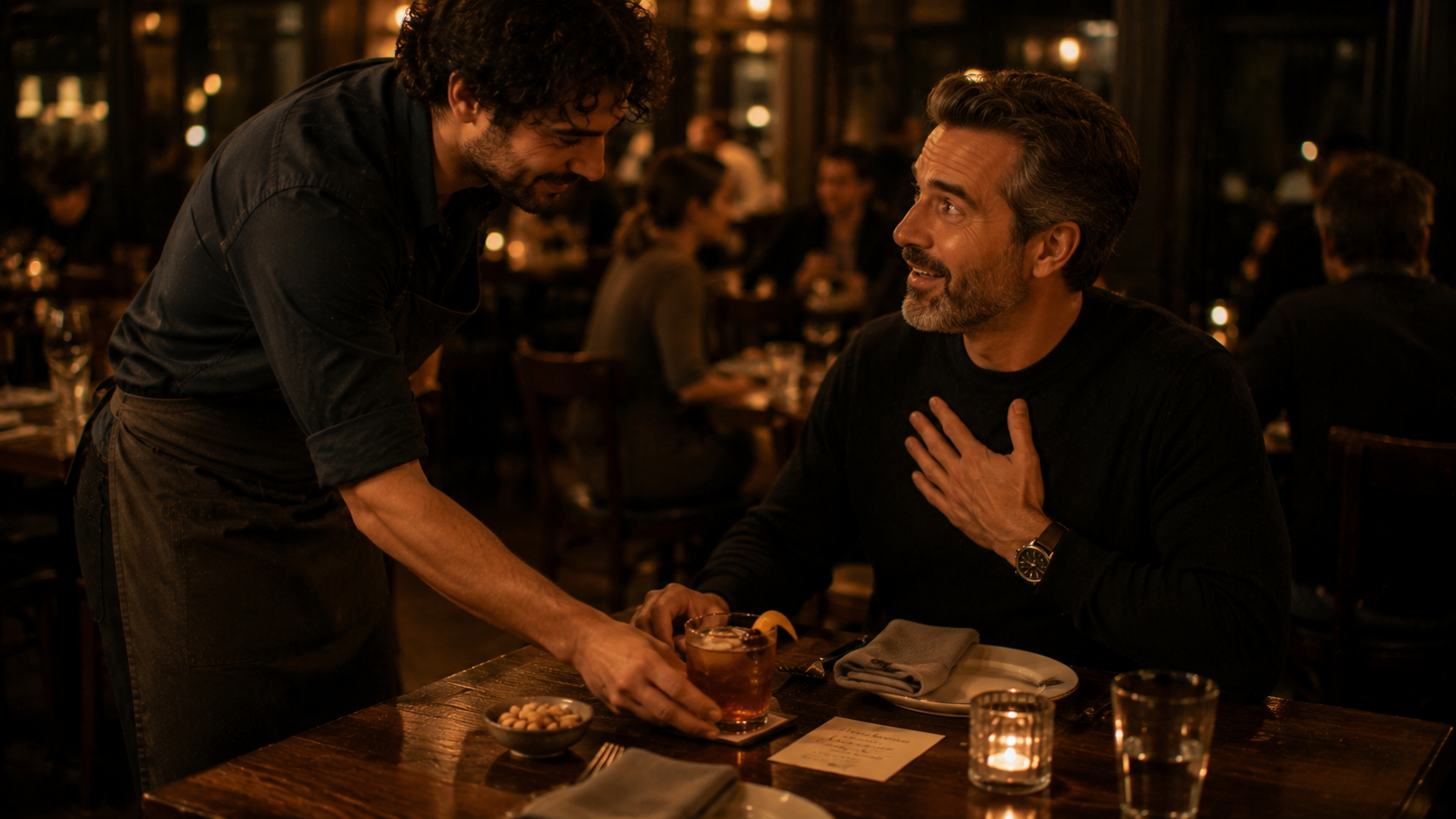
And then there's the other kind. You know the type — or you've been served by them, even if you couldn't explain what made the experience different. They weren't faster. They weren't louder or more charming or more performatively warm. They just made you feel like you were expected. Like the room was slightly better configured for your presence. Like someone had been keeping track.
The difference between those two experiences isn't talent. It's memory.
Psychologist Norbert Schwarz spent decades studying what he called the feeling of knowing — the subjective sense that another person has you in mind. His research found that this feeling dramatically increases trust, satisfaction, and the likelihood of returning. When absent, even excellent service feels transactional.
You can run a perfect table and still leave someone with the feeling that they were just a seat number. And you can fumble an order and recover it completely because you knew the person's name and asked about the thing they mentioned two visits ago. Memory is the variable that most service training never addresses.
WHAT UNFORGETTABLE SERVERS ACTUALLY DO DIFFERENTLY
They treat the end of an interaction as the beginning of the next one. Before a guest leaves, they've already noted the one thing that will matter when they come back. Not for the guest's benefit in the moment — for their own, later.
They ask questions that have answers worth remembering. Not 'how is everything' but 'is this your first time trying that?' Not 'can I get you anything else' but 'how was the event you mentioned?' The question signals that they were listening. The answer gives them something to hold onto.
They use names. This sounds obvious. Almost nobody does it consistently. A name used correctly — not forced, not performative, just natural — signals a kind of recognition that no amount of attentive service can replicate. It says: you are a person to me, not a table.
They don't try to remember everything. They try to remember one thing. One name, one detail, one thread to pick up. The attempt to remember everything leads to remembering nothing. The commitment to one thing, written down, held onto — that's what separates the good from the unforgettable.
TAOBAR Host Mode is built on this exact principle. One name. One detail. The usual. Enough to make someone feel like the room was ready for them. That's the whole practice — and it's available to anyone willing to treat the relationship like it continues after they walk out the door.
TAOBAR
Walk in ready.
TAOBAR is live on iOS. Download the beta and walk in ready.